
Apex Performance Tuning Melbourne — European and performance car workshop
Apex Performance Tuning
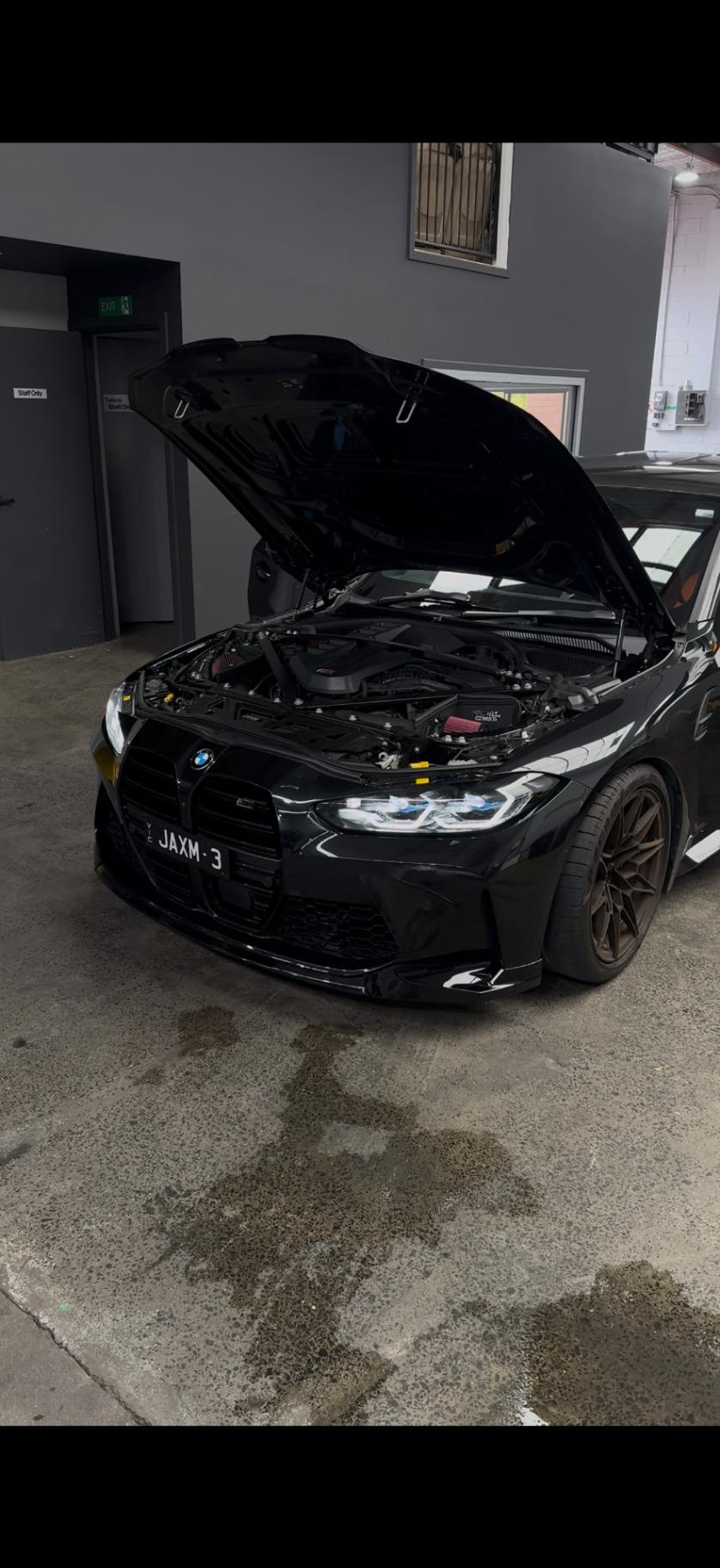
BMW G80 M3 with bonnet open during diagnostic work at Apex Performance Tuning
European Diagnostics · Melbourne

European car diagnostics Melbourne.
Measured, not guessed.

Apex Performance Tuning is an independent European vehicle specialist workshop in Wantirna South. We are not a manufacturer and not an authorised dealership.

Factory diagnostic software for BMW, Audi, Volkswagen, Mercedes-Benz and Porsche — ISTA, ODIS, Xentry and PIWIS — used the way the manufacturer intended: guided fault-finding, live data, actuator tests and coding. If a fault has already survived one or two parts changes elsewhere, this is the page you want.

For service, repair and diagnostic enquiries at Apex, Wantirna South.

★ 4.9-star Google ratingManufacturer warranty preservedOEM on request
Quick answer

Apex Performance Tuning is an independent European and performance car specialist workshop at Unit 4/6 Woodbine Court, Wantirna South VIC 3152, servicing greater Melbourne. We are not a dealership.

European Car Diagnostics Melbourne is carried out to manufacturer specification with genuine or OEM-equivalent parts and manufacturer-level diagnostic software, so your statutory and new-car warranty stays intact.

Open Monday to Friday 8:30am–5:30pm, contact 0483 939 216. Every job is quoted in writing against your VIN before work begins and documented with video inspection.

4.9★
Google rating
Warranty
Manufacturer schedule preserved
Photo & video
Inspection evidence
Approval first
No extra work without your OK
What we do

Every service, every job —
done properly.

Manufacturer-spec intervals, dealer-level diagnostics and OEM-grade parts. Every service is quoted in writing against your VIN before work begins, with a clear, line-itemised breakdown.

  • 01

    Fault code interpretation

    A code is a symptom, not a diagnosis. We read the fault memory with factory software, check freeze-frame data and environmental conditions, then test the circuit or component the code is actually pointing at.

  • 02

    Live data and logging

    Fuel trims, rail pressure, boost deviation, cam correlation, misfire counters per cylinder, clutch adaptation and temperature values — recorded on a road test under the conditions where the fault appears.

  • 03

    Intermittent fault work

    Faults that only appear cold, only when hot, or only on a bump are wiring, connector or sensor-behaviour problems. We chase them with wiring diagrams, pin-outs and back-probing rather than replacing modules.

  • 04

    Electrical and module faults

    CAN and LIN bus communication faults, module sleep and quiescent-drain testing, battery registration and charging-system diagnosis on cars that flatten a battery for no obvious reason.

  • 05

    Coding, calibration and adaptations

    Component protection, camera and radar calibration where supported, injector coding, throttle and DSG adaptation resets — the steps that make a repair actually finish correctly.

  • 06

    Pre-tune health diagnostics

    Compression and leak-down where warranted, boost-leak testing, spark plug and coil condition, fuel-trim review. No calibration work starts on a car with an unresolved mechanical fault.

Why Apex

Dealer-grade work.
Without the dealer wait-list.

  • 01

    Manufacturer software, per marque

    ISTA for BMW, ODIS for VW and Audi, Xentry for Mercedes-Benz, PIWIS for Porsche. Generic scan tools miss module-specific tests, guided functions and half the fault memory.

  • 02

    Diagnosis is the product

    We charge for diagnostic time and give you the findings in writing — measured values, what they mean, and what the repair path is. You are not paying for a parts lottery.

  • 03

    Second-opinion work is normal for us

    A meaningful share of the cars in the workshop arrive after a fault was misdiagnosed elsewhere. We start again from measurement, not from the previous conclusion.

  • 04

    Platform-specific pattern knowledge

    N54 and N55 wastegate rattle, B58 coolant behaviour, EA888 chain tensioner symptoms, DSG pressure-regulation faults, S65 rod bearing wear indicators — we know the known failures per platform.

  • 05

    Documented findings

    Photos and short videos of what we found, sent to your phone, alongside the data. You approve the repair understanding what is wrong.

  • 06

    Repair capability behind the diagnosis

    We find it and we fix it — timing chains, cooling systems, mechatronic work, driveline repair and calibration all happen in the same workshop.

Deep dive

Why the same fault gets misdiagnosed repeatedly.

Most incorrect diagnoses come from treating the fault code as the answer. A P0300 random misfire code names the symptom and nothing else — the cause might be a coil, a carbon-loaded intake port, a failing high-pressure fuel pump, a vacuum leak, or an injector with a drifting flow rate. Replacing the cheapest plausible part and clearing the memory looks like a repair for about a week.

The alternative is to measure. Fuel trims tell you whether the engine is running lean and at which load. Misfire counters tell you which cylinder and under what conditions. Rail pressure deviation under load separates fuelling from ignition. On direct-injection European engines, a borescope through the intake port often ends the discussion in five minutes.

  • Codes are ranked, not equal

    Stored, pending and permanent codes carry different weight, and the order they set in matters. Clearing the memory before recording it destroys the most useful evidence you have.

  • Conditions matter more than counts

    A fault that appears at 40°C coolant temperature and disappears at 90°C is a different fault to one that only appears at high load, even with the same code.

  • Wiring before modules

    Modules fail far less often than the connectors, grounds and looms feeding them. Back-probing under load finds what a static resistance check will not.

What a diagnostic appointment involves.

Bring the car in with the fault as described — do not clear the codes beforehand, and tell us exactly when it happens. We interview you first, because the conditions you describe usually narrow the search more than the fault memory does.

From there: full fault-memory read across every module with factory software, freeze-frame review, live-data capture at idle and on a road test replicating your conditions, and physical inspection on the hoist. Where the data points at a component, we test that component rather than assuming it. You get the findings, the measured values and a written repair quote before anything is replaced.

Diagnostics before modification.

Every calibration job at Apex starts with diagnostics, because a tune amplifies whatever the car already has wrong. A small boost leak, a tired coil, a marginal high-pressure fuel pump or an unresolved cam correlation deviation will all behave far worse with additional load and timing.

If we find a mechanical or electrical fault during a pre-tune inspection, we tell you and we fix it first. That order of operations is why we can stand behind the calibration afterwards.

Questions

Common questions,
straight answers.

How do you diagnose intermittent faults?+

By recreating the conditions rather than reading codes in the workshop car park. We record live data on a road test at the temperature, load and road surface where you experience the fault, then test the wiring, connectors and sensor behaviour in that state. Intermittent faults are almost always connection or sensor-behaviour problems, and static tests miss them.

Can you diagnose a car another workshop could not repair?+

That is a regular part of our week. We start from measurement rather than from the previous conclusion — full factory-software scan, live data, and physical inspection — and we tell you plainly what the data supports. Bring any invoices for parts already replaced; it saves duplicating work.

My check engine light is on but the car drives fine. Is it urgent?+

It depends entirely on the fault. Some codes are emissions-related and cosmetic in the short term; others — cam correlation, misfire, lean running, low rail pressure — can damage catalytic converters or the engine if you keep driving. Have it read before you decide, and do not clear it in the meantime.

Do you use dealer diagnostic software?+

Yes. ISTA for BMW, ODIS for Volkswagen and Audi, Xentry for Mercedes-Benz and PIWIS for Porsche, on site at the Wantirna South workshop. That gives us guided fault-finding, actuator tests, coding and the full fault memory across every module.

Do I pay for diagnostic time?+

Yes — diagnostic time is real work and it is where the value is. What you get for it is a documented set of measured findings and a repair path, rather than a sequence of replaced parts. Send us your VIN and a description of the fault and we will confirm the scope before you book.

What should be checked before an ECU tune?+

Spark plug and coil condition, boost-leak test, fuel trims and rail pressure under load, cooling system health, oil condition and service history, plus a full fault-memory scan. On higher-mileage cars we look harder at the high-pressure fuel system and the cooling system, because those are what calibration loads hardest.

Where is the workshop?+

Apex Performance Tuning, Unit 4/6 Woodbine Court, Wantirna South VIC 3152 — easy from EastLink, the M1 and Melbourne's east. Call 0483 939 216 to book a diagnostic appointment.

Book in

Ready for a proper quote?

Send your registration or VIN, current kilometres and what the car needs. We come back with the scope in writing — usually within the business day — and nothing extra is carried out without your approval.