
What actually limits an AMG calibration.
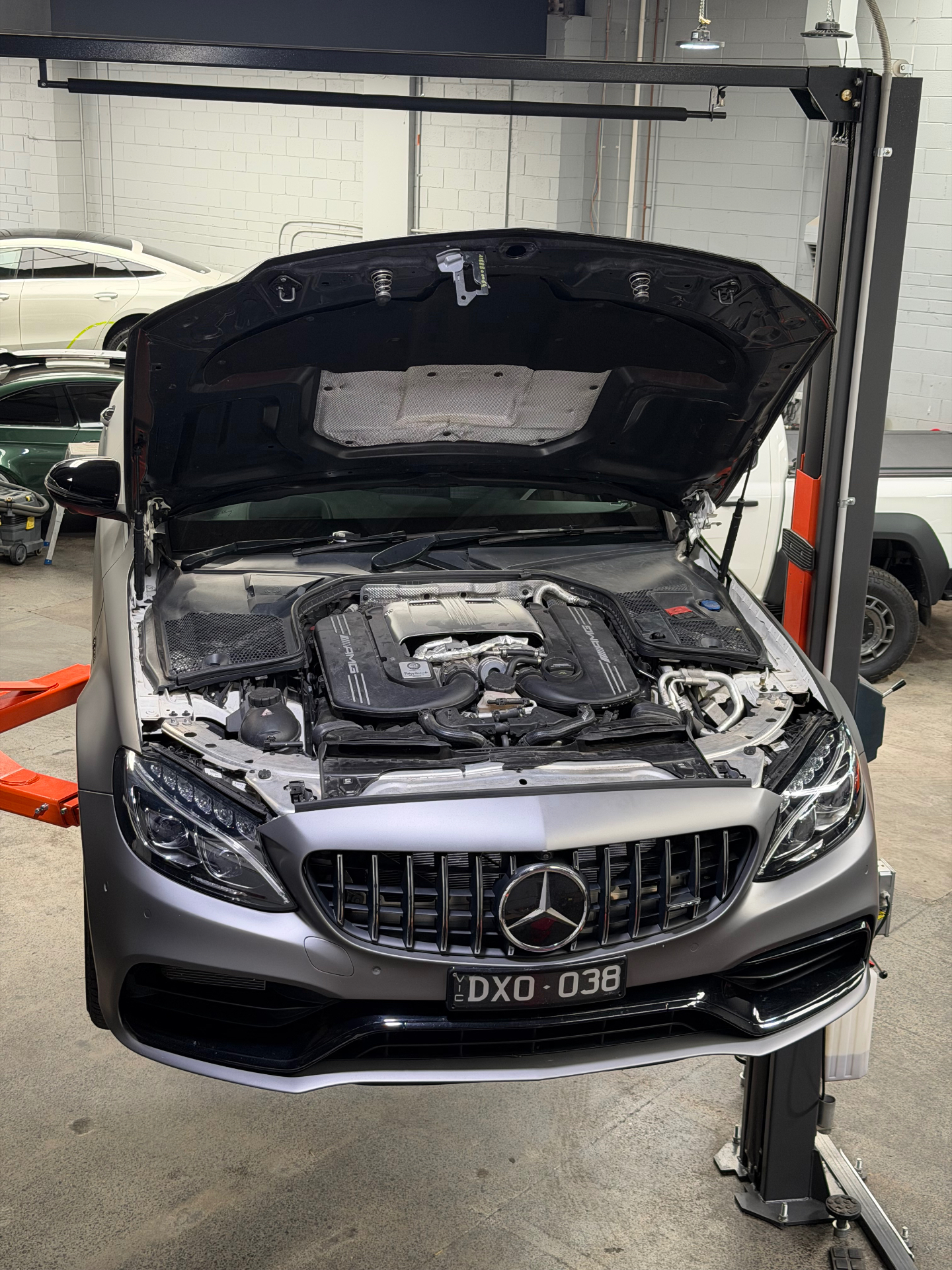
Modern AMGs leave the factory with far less headroom than the tuning market implies. The M177 4.0 twin-turbo V8 places both turbochargers inside the vee, which is excellent for response and packaging and unhelpful for underbonnet temperatures. The M139 in the A45 S runs some of the highest specific output of any production four-cylinder, with factory boost already near the limit of the standard turbocharger.
That means the honest constraint on an AMG tune is thermal, not software. Intake temperature, charge cooling capacity and oil temperature dictate what the car can hold on a warm Melbourne day — and a calibration that ignores that will make one impressive pull and then pull timing for the rest of the drive. We calibrate for the third run, not the first.
Charge cooling first
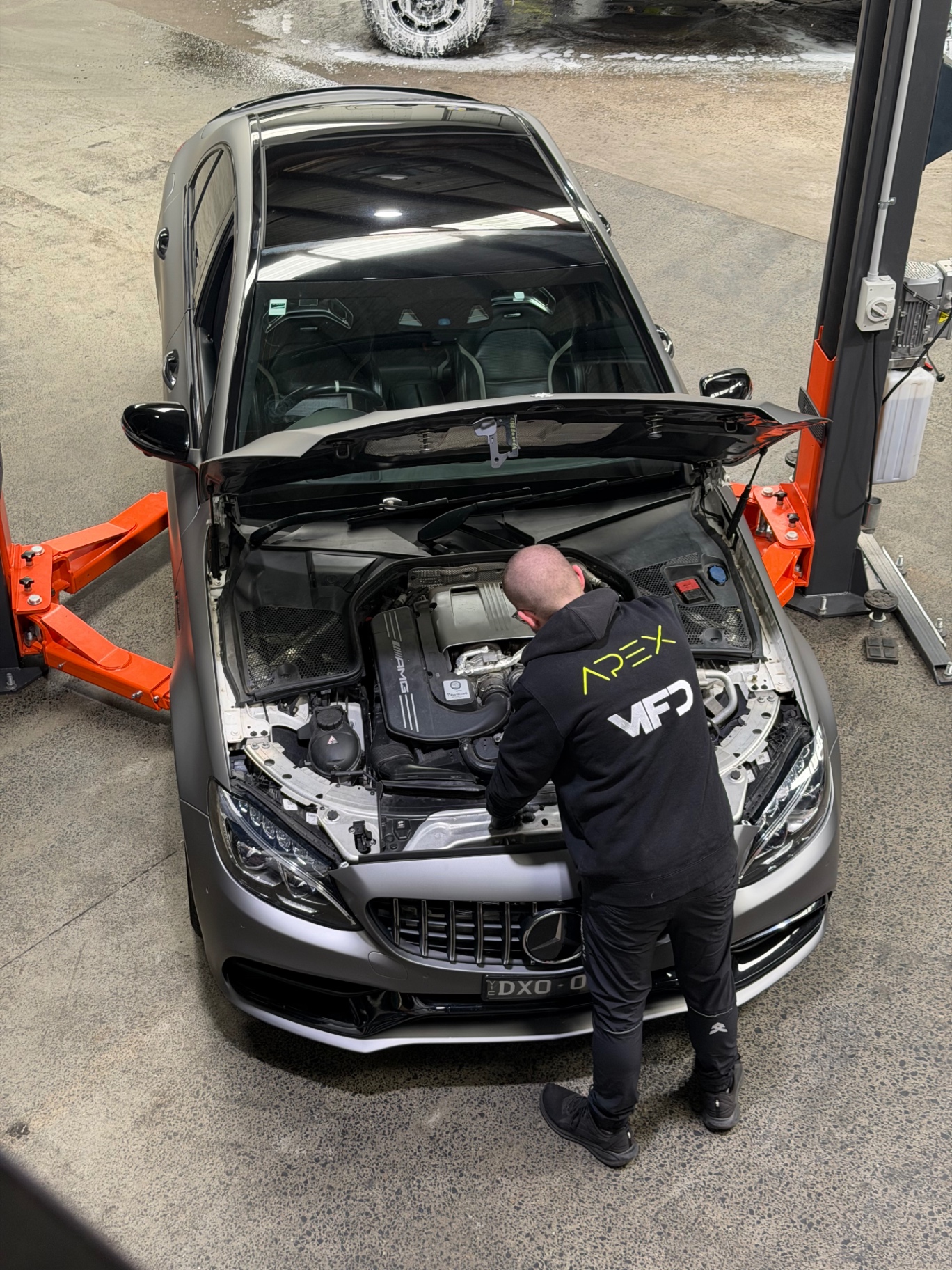
On both the V8s and the M139, intercooler and heat-exchanger performance sets the real ceiling. We log intake temps before deciding what is sensible.
Spark plugs and coils
Tired plugs are the most common cause of misfire after a tune. Replaced on interval, gapped to spec, before calibration.
Charge pipes and boost leaks
Pressure-tested before any map goes on. A small leak reads as a fuelling problem and hides real knock behaviour.
Transmission health
MCT and 9G-Tronic fluid condition is checked. More torque through tired fluid is how these gearboxes start slipping.