

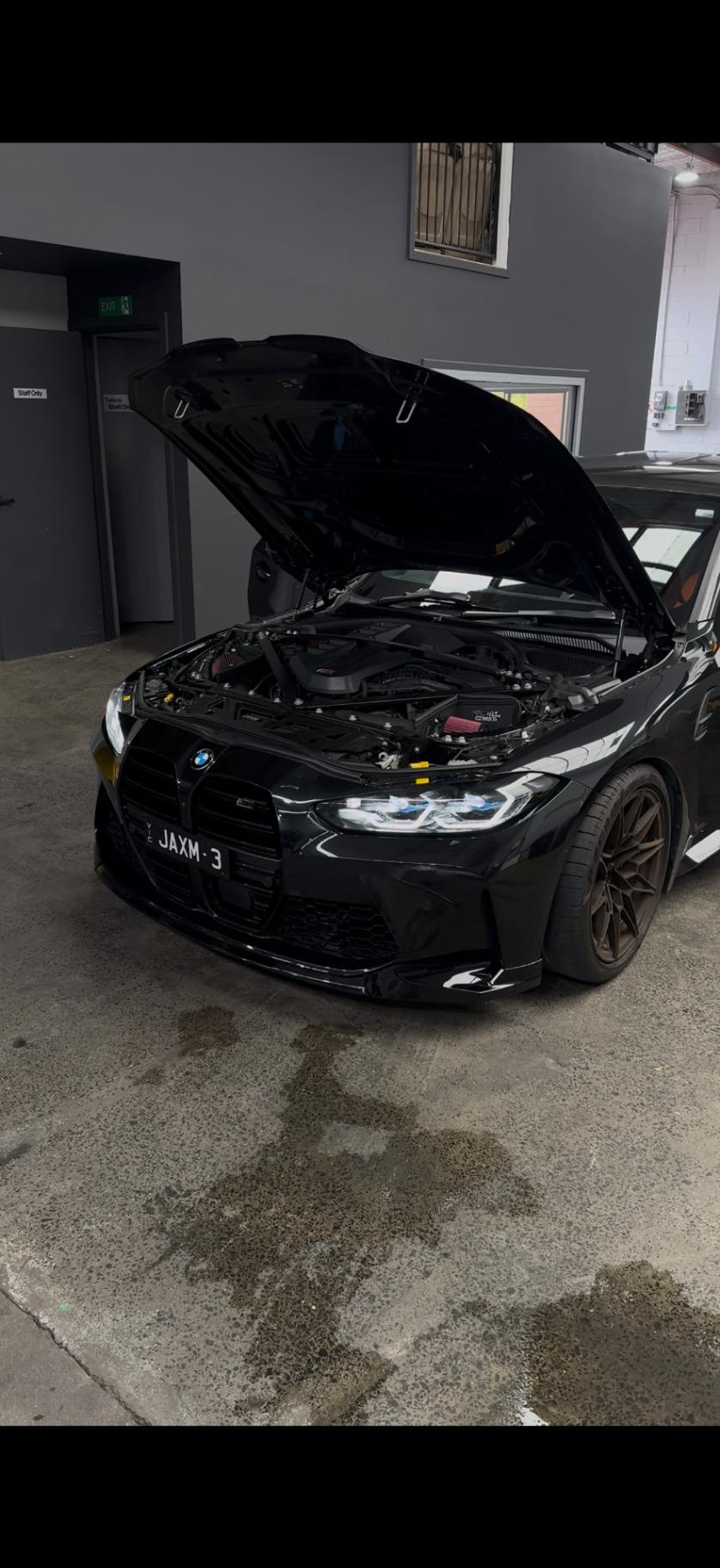
Why direct-injection BMWs carbon up.
In a port-injection engine, fuel is sprayed onto the back of the intake valve every intake stroke. That fuel cleans the valve. In a direct-injection engine, fuel goes straight into the cylinder — the intake valve never sees fuel, so it never gets washed. Combustion blow-by, oil vapour from the PCV, and normal exhaust reversion all deposit carbon on the back of the intake valve over time.
Every direct-injection BMW is affected: N54, N55, N63, S55, S58, N20, N26, B58 (less so, thanks to hybrid port + direct injection on later revisions). The rate of buildup depends on driving style (short trips are worse), oil consumption (more oil vapour = more carbon), and PCV health.
Symptoms usually appear between 80–120k km: rough cold idle, throttle hesitation, dropped fuel economy, occasional misfires. Left long enough, valves can fail to seat properly and compression drops. Walnut blasting reverses it — restores factory drivability, throttle response and economy.